“early processing” search results (3000)

History of introduction and expansion of Coffee in China in the early stage of Coffee Development (5)
1. From the first peak period of the development of China's coffee industry (1952-1961) to the late 1940s, according to recorded figures, there are 2173.33 hectares of rubber plantations in Hainan Island, with a total of 867600 rubber trees, with an annual output of 199,000 tons of dry rubber, and more than 300,000 coffee plants. the annual output of coffee beans is 1 ton. According to a survey in the early 1950s, there was a large amount of coffee left in Fushan area of Chengmai County, with a total of 70,000.
2015-03-09 China coffee development course early stage introduction expansion
Elsa Coffee Manor-the way to Costa Rican Coffee
At the COE boutique coffee competition in Costa Rica in early May 2013, two raw coffee beans from Elsa Coffee Manor won the prize. Anyone familiar with coffee knows that COE is the most famous boutique coffee competition in the world, and the honor of coffee beans means that they can be sold at international online auctions for several times or even tens of times higher than the price of ordinary raw beans. Costa Rican coffee essence
2015-11-21 El Coffee Manor Costa Rica boutique Road 2013 early this month
Ecuador Hasenda Coffee Garden Flavor Description Processing Characteristics Variety Taste Introduction
Ecuador is the world's highest arabica coffee plantation. Arabica coffee trees were first introduced to Ecuador in 1952 and the quality of their coffee is excellent, especially when harvested in early June. Ecuadorian coffee beans can be divided into Galapagos (Galapagos) and Gigante (Gigante) two varieties, both have large particles, heavy portions, balanced acidity, aromatic characteristics. uh
2016-10-15 Ecuador Hassenda Coffee Garden Flavor Description Treatment Characteristics Variety Region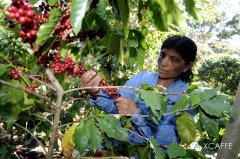
Red Honey Kiss 90 + rare good coffee treated with Ethiopian native red wine
Joseph Brodsky, the founder of Ninety +, discovered early that all the world's high-quality raw coffee beans originated in Ethiopia, and its different flavors of many different varieties are no less than 10, 000 grapes into 1 million different wines. Ninety percent of the raw beans come from the original varieties of Ethiopia, including Gesha of Manor Panama, which is also an Ethiopian heirloom (Heir).
2016-07-05 Red honey 90mm Ethiopia native red wine processed obtained coffee ninety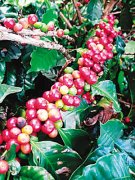
90 + Dark Fruit Taste in Ethiopia Yirgacheffe (Yega Snow) producing area
Joseph Brodsky, the founder of Ninety +, discovered early that all the world's high-quality raw coffee beans originated in Ethiopia, and its different flavors of many different varieties are no less than 10, 000 grapes into 1 million different wines. Ninety percent of the raw beans come from the original varieties of Ethiopia, including Gesha of Manor Panama, which is also an Ethiopian heirloom (Heir).
2016-07-05 Ninety Ethiopia Yirgacheffe Yega Chevy producing area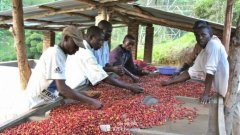
Yemen, a coffee-producing region in Asia
Mocha Mattari early Yemeni coffee was mainly exported from the port of Mocha, so the coffee that was later exported from here was named after Mocha. In Yemeni coffee, Mattari and Sanani are more famous, among which Matari tastes more full-bodied, with strong acidity and cocoa flavor, while Sanani has more
2014-08-21 Asia Coffee producing areas Yemen Mocha Matari Tali Ma
Introduction to the characteristics of coffee grindability treatment in Berman Manor, Kenya
It entered Kenya in the 19th century, when Ethiopian coffee drinks were imported into Kenya through southern Yemen. But it was not until the early 20th century that the bourbon was introduced by the St. Austen Mission (St.AustinMission). Kenyan coffee is mostly grown at an altitude of 1500m, 2100m, and is harvested twice a year. To ensure that only ripe berries are picked, people must be in the forest
2016-10-13 Kenny Abel Manor Coffee Grinding processing characteristics Variety producing area Taste
Prospect of 90 + patented "Ruby treatment" 90 + Panamanian Rosa Manor
Joseph Brodsky, the founder of Ninety +, discovered early that all the world's high-quality raw coffee beans originated in Ethiopia, and its different flavors of many different varieties are no less than 10, 000 grapes into 1 million different wines. Ninety percent of the raw beans come from the original varieties of Ethiopia, including Gesha of Manor Panama, which is also an Ethiopian heirloom (Heir).
2016-07-05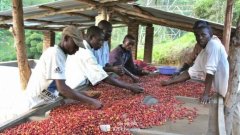
World boutique coffee producing area Asian coffee producing region Yemen
Mocha Mattari early Yemeni coffee was mainly exported from the port of Mocha, so the coffee that was later exported from here was named after Mocha. In Yemeni coffee, Mattari and Sanani are more famous, among which Matari tastes more full-bodied, with strong acidity and cocoa flavor, while Sanani has more
2014-09-15 Coffee knowledge boutique coffee producing area Yemeni coffee Asian coffee
Kenyan Coffee Origin Esopia Coffee production area introduces boutique coffee
Kenya is bordered to the north by Ethiopia, the origin of Arabica coffee trees, but it was not until the beginning of the 20th century that coffee cultivation began. In the 19th century, missionaries introduced Arabica trees from the leaves, but did not plant them in large quantities. It was not until 1893 that coffee was cultivated on a large scale because of the introduction of Brazil's ancient bourbon seeds. That is to say, Kenyan coffee is of Brazilian origin, because of water.
2016-06-23 Kenya coffee origin lichen Pia producing area introduction boutique
An introduction to the characteristics of the Yega Sheffiwoca Coffee Flavor Manor in Ethiopia
According to Ethiopian legend, it was founded by Ethiops, one of the twelve children of Kush, the son of Ham and the grandson of Noah. Another legend claims that the lineage of its ruler can be traced back to an affair between King Solomon and the Queen of Sheba, although this legend is of a mythical nature.
2016-08-16 Yuyun sweet Ethiopia Yega Sheffield Waka coffee flavor taste
What kind of coffee are there in Kenya coffee fruit producing areas? Kenya
Kenya Coffee is the origin of Arabica coffee trees in Kenya, but it was not until the beginning of the 20th century that it began to cultivate coffee. In the 19th century, missionaries introduced Arabica trees from leaves, but did not plant them in large quantities. It was not until 1893 that coffee was cultivated on a large scale after the introduction of Brazil's ancient bourbon seeds, that is, Kenyan coffee.
2016-04-28 Kenya coffee producing areas which individual products
Ethiopian Coffee Processing Method Processing Method Sunlight
The birthplace of coffee-Ethiopia. The coffee tree originated in Ethiopia, where it was originally a wild plant, and the name coffee comes from the Ethiopian town of Kaffa. In fact, many coffee trees in Ethiopia are still wild plants, and the coffee grown on this coffee tree is full of particles and slightly fragrant. Humans may have been as early as the 9th century
2016-05-16 boutique coffee ethiopia treatment way method sun
Ethiopian Coffee Processing Method Processing Method Sunlight
The birthplace of coffee-Ethiopia. The coffee tree originated in Ethiopia, where it was originally a wild plant, and the name coffee comes from the Ethiopian town of Kaffa. In fact, many coffee trees in Ethiopia are still wild plants, and the coffee grown on this coffee tree is full of particles and slightly fragrant. Humans may have been as early as the 9th century
2016-05-13 boutique coffee ethiopia treatment way method sun
Sour Bolivian Coffee Flavor description Grinding degree Taste characteristics of Fine Coffee in producing area
The early Bolivian coffee was of low quality and the market was very poor. Usually the picked coffee fruit is bumped all the way to the processing plant after a simple peeling treatment. Due to the imperfect infrastructure, the traffic is underdeveloped. Coffee farmers have to overcome the rugged mountain road and transport the beans to the higher altitude area of La Paz for washing. If the coffee fruit can not be delivered to the processing in time
2016-10-08 Sour rich Bolivia coffee flavor description grinding taste variety special
Coffee planting History of Coffee introduction and expansion in China in the early stage (5)
1. From the first peak period of the development of China's coffee industry (1952-1961) to the late 1940s, according to recorded figures, there are 2173.33 hectares of rubber plantations in Hainan Island, with a total of 867600 rubber trees, with an annual output of 199,000 tons of dry rubber, and more than 300,000 coffee plants. the annual output of coffee beans is 1 ton. According to a survey in the early 1950s, there was a large amount of coffee left in Fushan area of Chengmai County, with a total of 70,000.
2014-10-14 Coffee knowledge coffee growing history Chinese coffee
Asian Fine Coffee Bean Indian Plantation A Coffee
India was the first country in Asia to grow coffee, and India's A-grade coffee beans have always been a coffee that has received strong attention from coffee lovers around the world. Its flavor and taste characteristics: uniform particles, rich taste, smooth and delicious. The cultivation of Indian coffee originated with their colonists, the British. In the 17th and early 18th centuries, the English did not drink tea as much as they do today.
2014-09-30 Coffee knowledge Asian specialty coffee beans Indian coffee
YAMI third generation Belgian pot (silver) / Belgian pot / coffee pot
[brand] YAMI [color] Silver [size] 280*125*385mm [weight] 2.4kg [characteristics] Belgian coffee maker, as early as the 19 th century has been the royal coffee pot of Belgium. In order to show the royal temperament, Belgian craftsmen took great pains to create this elegant kettle, wrapped in gold and cast copper, to make the original ordinary coffee pot dazzling and dignified, as if with a raw belt.
2015-08-07 YAMI third Generation Belgium Silver Coffee maker Brand Color
Indian plantation A coffee known as "very nugget"
India was the first country in Asia to grow coffee, and India's A-grade coffee beans have always been a coffee that has received strong attention from coffee lovers around the world. Its flavor and taste characteristics: uniform particles, rich taste, smooth and delicious. The cultivation of Indian coffee originated with their colonists, the British. In the 17th and early 18th centuries, the English did not drink tea as much as they do today.
2015-10-13 very natural nugget name india plantation coffee
Encyclopedia of Coffee talking about individual Coffee
Today, I casually typed individual coffee on Baidu, and the results are as follows: single coffee is made from single coffee beans produced in the country of origin, and pure coffee is usually drunk without milk or sugar. Have strong characteristics, special taste: or fresh and soft, or mellow smooth; the cost is higher, so the price is more expensive. For example, the famous Blue Mountain Coffee and Brazilian Coffee
2014-09-11 Coffee knowledge individual coffee coffee encyclopedia